Evaluating the Smart Farming AgriTech Business Brochure for Modern Agricultural Branding
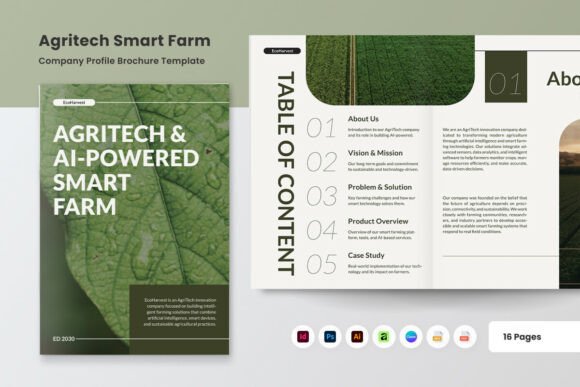
In the rapidly evolving landscape of agricultural technology, the ability to communicate complex value propositions clearly is often the difference between securing investment and fading into obscurity. Founders, product marketers, and business development leaders in the AgriTech sector face a unique challenge: they must bridge the gap between high-tech hardware integrations and the tangible benefits of sustainable food production. A Smart Farming AgriTech Business Brochure serves as a critical tool in this endeavor, offering a structured medium to project authority and innovation within the global food supply chain. Unlike generic corporate templates, this specific resource is designed with a section-based storytelling flow that guides readers from industry problems to data-driven solutions with absolute clarity.
When evaluating communication assets for an agritech venture, it is essential to understand what distinguishes a specialized brochure from standard marketing materials. The primary differentiator lies in the intentional design architecture. This brochure utilizes a professional navy-and-teal palette, a color scheme chosen not merely for aesthetics but for its psychological association with trust, stability, and technological advancement. In a sector where stakeholders are wary of unproven technologies, establishing immediate visual credibility is paramount. The layout balances these colors with clean, structured KPI cards and high-level flow diagrams. These elements allow companies to present intricate hardware and software integrations in a way that feels modern and approachable, rather than overwhelming or overly technical.
Structural Advantages Over Generic Templates
Many businesses initially consider using general-purpose business brochures or DIY design platforms without industry-specific constraints. While these alternatives offer flexibility, they often lack the narrative framework required for deep-tech industries. A generic template might prioritize image-heavy layouts suitable for retail or hospitality, which can dilute the message of an AgriTech firm that relies on data integrity and system reliability. The Smart Farming AgriTech Business Brochure addresses this by embedding a logical progression into its 16 customizable pages. It moves the reader through a deliberate journey: identifying the inefficiencies in current farming practices, introducing the technological intervention, and substantiating claims with measurable outcomes.
The inclusion of dedicated spaces for KPI cards is a significant structural advantage. In the AgriTech space, investors and partners look for metrics such as yield improvement percentages, water usage reduction, or energy efficiency gains. Generic brochures often force users to awkwardly insert these figures into text blocks or unrelated graphic elements. In contrast, this specialized layout provides predefined areas for data visualization, ensuring that critical statistics are highlighted effectively. This approach aligns with the decision-making processes of B2B buyers who scan for evidence of performance before engaging with detailed technical specifications.
Technical Specifications and Production Readiness
For organizations serious about their brand presence, the technical quality of print and digital assets cannot be overlooked. This brochure is delivered in an A4 portrait format with a 3mm bleed, adhering to international printing standards. This ensures that when the document is professionally printed, there are no white edges or alignment issues that could detract from the professional image of the company. The files are prepared in CMYK at 300 dpi, the industry standard for high-resolution offset printing. This level of preparation saves considerable time and cost during the production phase, as it eliminates the need for pre-press adjustments that are often required with lower-quality templates.
Furthermore, the versatility of the file formats supports a wide range of workflows. The package includes editable files for Adobe InDesign (.INDD, .IDML), Adobe Illustrator (.AI), Adobe Photoshop (.PSD), and Affinity Designer (.AF). This compatibility is crucial for teams that may have diverse software preferences or specific branding guidelines that require manipulation at the vector or raster level. For teams without access to professional design software, the inclusion of a Canva link provides an accessible alternative, allowing for quick text updates or color adjustments without compromising the overall layout integrity. The use of free fonts and icons further reduces barriers to entry, ensuring that there are no hidden licensing costs or font substitution issues when sharing the file among team members.
Comparative Analysis: Custom Design vs. Templated Solutions
When deciding between commissioning a fully custom design from an agency and utilizing a premium template like the Smart Farming AgriTech Business Brochure, several factors come into play. Custom design offers unlimited creative freedom but often comes with a high price tag and a lengthy turnaround time. For startups and scale-ups operating on tight budgets and aggressive timelines, the wait time for a custom agency project can delay crucial fundraising rounds or product launches.
Conversely, low-cost or free templates found on general stock sites often suffer from poor organization, lack of industry relevance, and limited customization options. They may look acceptable at a glance but frequently fail when users attempt to insert substantial amounts of technical content, resulting in cluttered pages that undermine the message. The AgriTech brochure occupies a strategic middle ground. It offers the polish and structural intelligence of a custom job at a fraction of the cost and time. Because the paragraph and character styles are pre-defined, users can maintain typographic consistency even when making extensive edits, a feature often missing in cheaper alternatives.
Ideal Use Cases and Limitations
This brochure is particularly well-suited for AgriTech companies seeking to define the future of sustainable, technology-backed agriculture. It is an ideal asset for seed-stage startups preparing pitch decks for investors, established firms launching new sensor networks or AI-driven analytics platforms, and research institutions looking to commercialize findings. The narrative flow is specifically tuned to explain "problem-solution" dynamics, making it effective for educational outreach to traditional farmers who may be skeptical of new technology.
However, it is important to recognize the limitations. As a 16-page document, it is designed for comprehensive overviews rather than single-product flyers or quick one-pagers. If a company only needs to highlight a single feature of a device, this format might be too extensive. Additionally, while the navy-and-teal palette is professional and versatile, organizations with strict brand guidelines requiring vastly different color schemes will need to invest time in recoloring the assets. Fortunately, the fully editable nature of the objects and colors in the provided files makes this feasible, but it does require a basic understanding of design software to execute effectively without disrupting the visual balance.
Making an Informed Decision
Selecting the right marketing collateral is a strategic decision that impacts how a brand is perceived in the marketplace. For AgriTech ventures, the stakes are high; the audience consists of sophisticated investors, regulatory bodies, and practical end-users who demand clarity and proof of concept. The Smart Farming AgriTech Business Brochure offers a robust foundation for these communications. Its strength lies in its ability to organize complex information into a digestible, visually compelling narrative that respects the intelligence of the reader while guiding them toward a clear understanding of the value proposition.
Ultimately, the choice depends on the specific stage of the business and the resources available. For those needing a rapid, high-quality deployment that speaks the language of the industry, this template provides a significant advantage over starting from scratch or adapting ill-fitting generic designs. It empowers founders to focus on refining their message and strategy rather than wrestling with layout grids and typography settings. By leveraging a tool designed specifically for the nuances of the smart farming sector, companies can ensure their first impression is one of competence, innovation, and reliability.
It is also worth noting the importance of the documentation included with the package. The font info documentation file ensures that users can easily identify and install necessary typefaces, preventing common errors where text reflows or styles break due to missing fonts. This attention to detail in the deliverable reflects the same level of precision that AgriTech companies strive for in their own products. Whether the final output is a digital PDF sent via email or a high-gloss print piece handed out at a global trade show, the underlying structure supports a professional presentation that can help secure the partnerships and funding necessary to drive the agricultural revolution forward.