Mastering Client Records with a Professional Beauty Card
In the fast-paced environment of a salon or spa, the difference between a chaotic backroom and a streamlined operation often comes down to one simple tool: the Beauty Treatment Client Record Card. While many business owners obsess over interior design or social media aesthetics, the backbone of client retention and safety lies in how well you document their journey. A well-designed record card isn't just a piece of paper; it is a critical component of your brand identity and a legal safeguard. It serves as the memory of your business, ensuring that every visit feels personalized, safe, and professional.
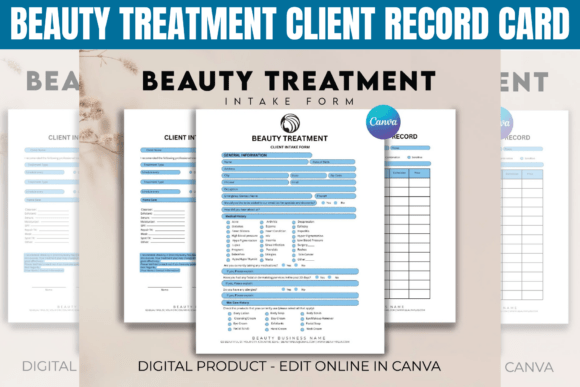
Visually, a high-quality Client Treatment Plan Template strikes a balance between clinical precision and welcoming warmth. Unlike sterile medical charts, a beauty record card should reflect the aesthetic of your space. Imagine a layout that uses clean lines and ample white space to prevent information overload, paired with a sophisticated sans serif font for headers that ensures legibility at a glance. The personality of the document should mirror your salon's vibe—whether that is minimalist and modern or lush and organic. When a client sees a document that looks as curated as your treatment room, it reinforces their trust in your expertise before you even begin the service.
Why Structured Documentation Elevates Brand Perception
The impact of a professional Treatment Record Card extends far beyond simple organization; it fundamentally alters how clients perceive your professionalism. In an era where data privacy and personalized care are paramount, handing a client a generic, scribbled-on notepad can undermine confidence. Conversely, presenting a structured Beauty Record Card signals that you take their health and history seriously. This consistency builds a narrative of reliability. When every interaction is documented with care, from allergy notes to product preferences, you create a seamless experience that makes the client feel known and valued.
From a design perspective, the visual hierarchy of these cards is crucial. Effective modern typography guides the eye logically through the form. Important sections like "Contraindications" or "Aftercare Instructions" need to stand out without shouting, often achieved through subtle weight variations in the typeface or strategic use of bolding. This attention to detail reduces errors. If a therapist can instantly locate a client's sensitivity to retinol because the section is clearly defined, you have prevented a potential adverse reaction. This level of clarity is what separates a hobbyist setup from a commercial-grade operation.
Furthermore, these records play a pivotal role in audience engagement and retention. When you pull up a file and recall that a client preferred lavender oil over eucalyptus six months ago, you aren't just remembering a detail; you are demonstrating active listening. This emotional connection turns a one-time visitor into a loyal advocate. The Client Record Cards become a tool for storytelling, tracking progress over time, and celebrating milestones in their skincare or wellness journey. It transforms a transactional service into a relational partnership.
Optimizing Workflow with Editable Design Assets
For salon owners and independent estheticians, flexibility is key. No two businesses operate exactly alike, which is why a static, pre-printed form often falls short. A template that is fully editable in platforms like Canva offers the freedom to adapt the document to your specific workflow. You might need an extra column for retail products sold, or perhaps you require a larger section for sketching brow mappings. With a customizable design asset, you can add your logo, adjust color palettes to match your branding, and rearrange sections to fit the rhythm of your consultations.
Choosing the right format is also part of the optimization process. Whether you prefer the standard US Letter (8.5 × 11 inches) or the international A4 size (8.3 × 11.7 inches), having access to both ensures you can print locally without formatting headaches. But beyond printing, consider the digital potential. Many modern spas are moving toward hybrid systems where these records are filled out on tablets. A clean, vector-based design scales perfectly across screens, maintaining its crispness whether viewed on a smartphone during a consultation or printed for physical filing. This adaptability future-proofs your administrative processes.
When evaluating a template, look for features that support long-term usability. Does it include checkboxes for common services? Is there a dedicated space for signature consent? These small elements save time and reduce friction during the intake process. A well-thought-out Client Treatment Plan Template anticipates the needs of both the practitioner and the client, removing unnecessary steps and allowing you to focus on the treatment itself. It acts as a silent assistant, keeping the conversation flowing smoothly while ensuring no critical data point is missed.
Practical Strategies for Implementation and Customization
Implementing a new recording system requires more than just downloading a file; it demands a thoughtful approach to integration. Start by auditing your current data collection methods. What questions do you ask every time? What information do you frequently forget to record? Use these insights to customize your Beauty Treatment Client Record Card. If you specialize in corrective skin treatments, your card might need detailed fields for "Before" and "After" analysis. If you run a relaxation spa, the focus might shift more toward lifestyle factors and stress levels.
Typography plays a subtle but significant role here. While you might be tempted to use a decorative script font for headers to add flair, prioritize readability above all else. Handwritten styles can be charming for logos or marketing materials, but for data entry forms, a clean serif font or a geometric sans serif ensures that handwritten notes by staff remain legible years later. Test your font pairings by printing a sample and filling it out with a standard ballpoint pen. If the ink bleeds or the text is too cramped, adjust the spacing or switch to a more open typeface.
Finally, consider the commercial implications of your choice. Using a professionally licensed template ensures you have the rights to modify and use the design indefinitely for your business. This avoids legal gray areas and supports the creators who build these essential tools. Whether you are a makeup artist building a portfolio of client looks or a spa owner managing a team of therapists, the right record card is an investment in efficiency. It streamlines operations, enhances the client experience, and provides a tangible representation of your commitment to excellence. By treating your documentation with the same creative care as your services, you elevate the entire standard of your practice.